
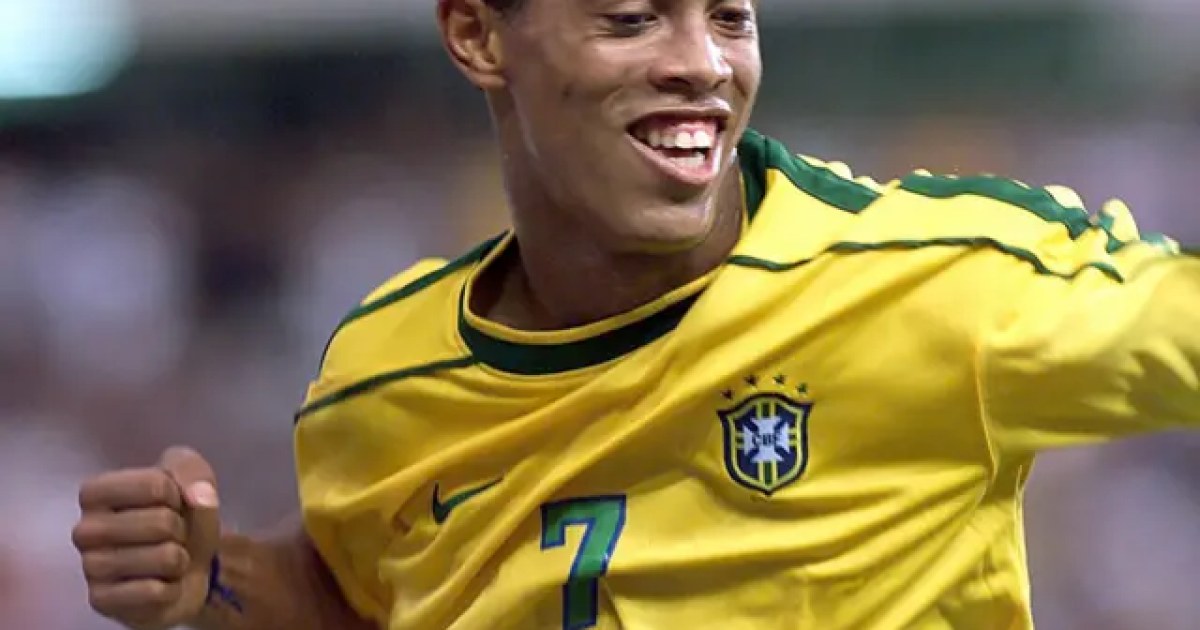
Born Ronaldo de Assis Moreira in Porto Alegre, Brazil, Ronaldinho grew up in a football family. His older brother Roberto was also a professional player, and the sport surrounded him from childhood. Ronaldinho’s early years at Gremio showed the qualities that later defined him: close control, creativity, acceleration and a relaxed confidence that made difficult skills look casual.
His move to Paris Saint-Germain introduced him to European football, but his true club peak came at Barcelona. When he arrived in 2003, Barcelona needed a new identity. Ronaldinho gave the club joy again. He won La Liga, the UEFA Champions League and the Ballon d’Or while becoming the player fans paid to watch regardless of the opponent. His standing ovation from Real Madrid supporters at the Santiago Bernabeu in 2005 remains one of the great signs of respect in football.
For Brazil, Ronaldinho was part of the 2002 FIFA World Cup-winning squad alongside Ronaldo Nazario and Rivaldo. His most famous World Cup moment came against England, when his long-range free kick surprised goalkeeper David Seaman. Whether fans describe it as genius, intention or improvisation, the goal became a permanent part of World Cup memory.
Ronaldinho’s achievement list is unusually complete. He won the World Cup, Copa America, Confederations Cup, Champions League, Copa Libertadores and Ballon d’Or. That combination matters because it shows success across national team football, European club football and South American club football. Very few players can claim such a broad trophy map.
His playing style also influenced a generation. Before Neymar became Brazil’s leading entertainer and before social clips dominated football culture, Ronaldinho was already creating viral moments. He played with elasticos, stepovers, body feints and passes that seemed to break geometry. Young fans copied him in streets and futsal courts because his football looked playful, not mechanical.
Annual income today is not easy to verify because Ronaldinho is retired from professional football. His current earnings are likely tied to endorsements, appearances, ambassador roles, social media, exhibition events and business partnerships. Older public estimates of his net worth have ranged around the $100 million mark, but these figures are not audited and should be described as media estimates. A careful AdSense-friendly article should not state a precise current salary.
During his peak, Ronaldinho earned major club wages and endorsements from global brands. His commercial appeal came from charisma. Brands did not only buy his football ability; they bought happiness, creativity and recognizability. Even after retirement, that image remains valuable because he is still welcome in legends matches, sponsor campaigns and football festivals.
Property and lifestyle content around Ronaldinho should be handled with caution. Media reports over the years have discussed luxury homes, cars, parties and travel, but exact property values are not consistently verified. Ronaldinho has also faced legal and financial controversies, so a safe article should focus on publicly known themes rather than exaggerated mansion claims. Use wording such as “reportedly linked with luxury properties and cars” unless using a verified legal source.
Ronaldinho’s lifestyle image is joyful and social. He is associated with music, beaches, nightlife, futsal, family and constant public affection. Fans do not view him as a distant corporate figure. They see him as the footballer who looked happiest with the ball. That emotional connection is why his content performs well on social platforms and why World Cup pages about him can attract readers who are not deeply statistical.
His decline from the absolute top came earlier than some expected, but it did not erase the magic. Football history is not only about longevity. It is also about peak beauty. Ronaldinho’s Barcelona years and Brazil moments gave fans enough beauty to last for decades. In many ways, his career is the strongest reminder that football is entertainment as well as competition.
For SEO, Ronaldinho articles should include keywords like “Ronaldinho career,” “Ronaldinho achievements,” “Ronaldinho World Cup 2002,” “Ronaldinho net worth,” “Ronaldinho lifestyle” and “Ronaldinho properties.” The article can also internally link to Ronaldo Nazario, Pele, Neymar, Messi and Brazil World Cup history.
Ronaldinho’s legacy is simple: he made greatness look like play. He won the biggest trophies, but his deeper achievement was emotional. He reminded fans that elite football can still feel like street football, full of surprise and imagination. That is why his name remains evergreen.
Ronaldinho is especially useful for engagement posts because his career produces visual questions: best trick, best free kick, best assist, best smile, best celebration and best Barcelona performance. These are search-friendly and social-friendly at the same time. A website can build quizzes, timelines and short-card posts from the same article without duplicating thin content.
When writing about his income and properties, keep the tone admiring but measured. Readers are curious about money, but they stay longer when the article explains why the money followed him. Ronaldinho sold joy. He made brands feel warmer and made football feel less corporate. That is the real lifestyle story behind the numbers.
A practical publishing tip is to pair this article with a Ronaldinho best moments post. The biography captures evergreen search, while the moments article can target social discovery. Together, they create a clean content funnel: the short post attracts fans, and the long profile gives them a reason to stay on the site.
The safest way to discuss Ronaldinho's wealth is to explain the types of income rather than force one exact total. Peak salary, Nike-style endorsements, appearance fees, ambassador roles and social media value all contributed to his commercial life. That approach gives readers useful context without turning estimates into facts. It also makes the article easier to refresh when newer appearance deals or ambassador roles are reported.
Source and fact-checking notes
FIFA/Britannica-style career records; Goal net-worth estimate article; public endorsement history.