
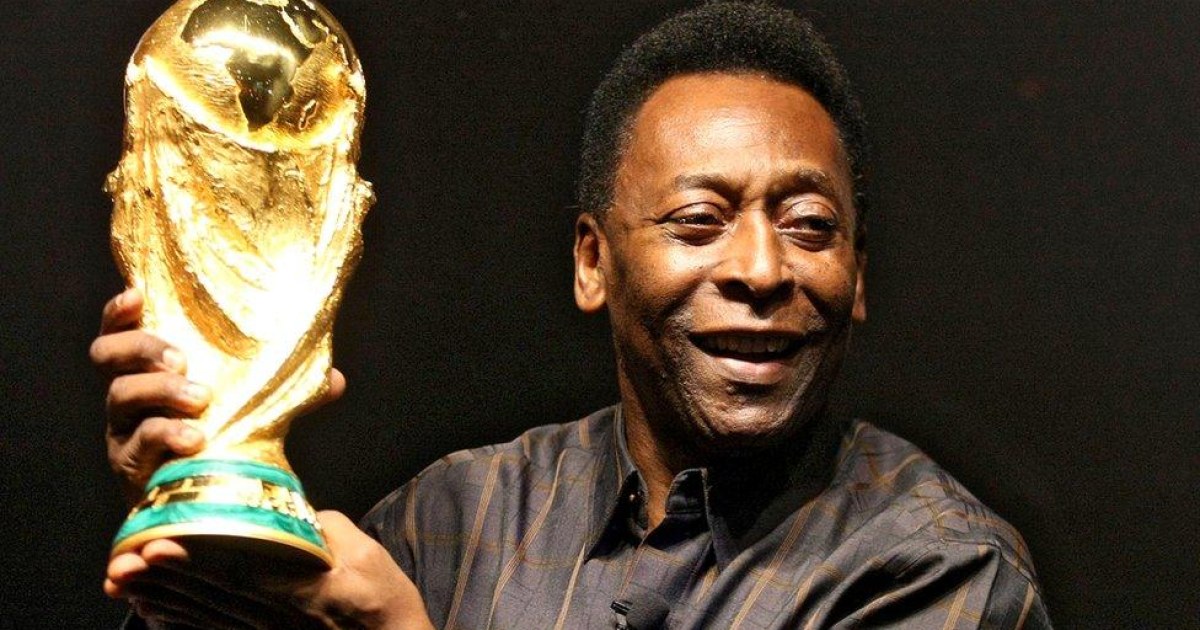
Born Edson Arantes do Nascimento in Brazil, Pele grew up in a football culture shaped by street skill, creativity and national hope. He joined Santos as a teenager and became a professional sensation almost immediately. At 15 he was playing for Santos; at 16 he was with Brazil; at 17 he was a World Cup champion. His rise sounds impossible today, but it helped create the modern idea of the teenage football prodigy.
The 1958 FIFA World Cup in Sweden introduced Pele to the world. He scored in the quarter-final, produced a hat-trick in the semi-final and scored twice in the final against Sweden. Brazil won its first World Cup, and Pele’s tears after the final became one of the tournament’s classic images. He was not just a promising player; he was proof that a teenager could transform the biggest stage in sport.
In 1962, Pele’s tournament was cut short by injury, but Brazil still won the World Cup. His third triumph came in 1970, when Brazil produced one of the most celebrated teams ever. The 1970 side blended Jairzinho, Tostao, Rivelino, Carlos Alberto and Pele into a footballing masterpiece. Pele’s header in the final and his role in Brazil’s fourth goal against Italy remain essential World Cup highlights.
His club career with Santos was equally important. Santos toured the world, and Pele became a global attraction. At a time when European club football did not have today’s global television reach, Santos used Pele’s fame to turn friendly matches into major events. Later, his move to the New York Cosmos helped popularize soccer in the United States and gave him a second life as an ambassador for the game.
Pele’s achievements include three FIFA World Cups, two Copa Libertadores titles with Santos, domestic championships and a long list of individual honors. Official and historical goal totals are debated because they include friendlies and tour matches, but there is no debate about his impact. He made football feel universal before the modern commercial machine existed.
Annual income for Pele should be framed historically and cautiously. He died in 2022, so he no longer has personal annual earnings. During and after his playing career, income came from club contracts, appearances, endorsements, ambassador roles, film, publishing and brand partnerships. His global reputation remained commercially valuable for decades, especially around World Cup cycles.
Estate and net-worth figures for Pele are not as transparent as public-company finances. Media estimates have varied, and exact property values depend on private estate records. A responsible article should avoid declaring a single definitive number unless it comes from verified legal filings. The safer and more professional wording is: Pele’s estate, brand rights and family holdings are privately managed, while public estimates should be treated as approximate.
Property coverage around Pele often mentions homes in Brazil and the United States, including connections to Santos, Sao Paulo and New York-area life from his Cosmos period. However, exact market values and ownership structures are not always publicly confirmed. A clean SEO article can discuss “reported residences and long-term real-estate connections” without pretending to have a complete property ledger.
Pele’s lifestyle differed from many modern stars. He lived as a statesman of football: commercial, polished, diplomatic and constantly in demand. He attended World Cup events, sponsor activations, charity programs and international ceremonies. His image was built around elegance and accessibility. Even when debates about Maradona, Messi or Cristiano Ronaldo grew louder, Pele remained the reference point for World Cup royalty.
His influence also extends beyond Brazil. Pele helped make the number 10 shirt iconic. He helped make Brazil the romantic home of attacking football. He helped make the World Cup a stage where personality, skill and national identity merge. When fans talk about “joga bonito,” they are speaking a language Pele helped popularize.
From a publishing perspective, Pele content should avoid turning into a simple net-worth article. His commercial life matters, but his value is historical. Use headings such as “Pele three World Cups,” “Pele Santos career,” “Pele income and endorsements,” “Pele properties” and “Pele lifestyle.” These headings capture search traffic while keeping the article safe, respectful and useful.
Pele’s legacy is secure because no later star has matched his World Cup trophy record. Messi has the modern completion story, Maradona has the single-tournament myth, Cristiano Ronaldo has the longevity machine and Ronaldo Nazario has the striker peak. Pele has three stars. That is why, every four years, the football world returns to him.
For a new website, Pele is also valuable because his story is safe for long-form educational content. It is rich in history, family appeal, national pride and World Cup records. Instead of chasing unverified luxury rumors, publishers can build trust by explaining why three World Cup wins are so rare and why his 1970 Brazil team remains a benchmark for attacking football.
A strong article update strategy is to refresh Pele content during Brazil matchdays, World Cup anniversaries and debates about all-time rankings. Add comparison boxes, record timelines and internal links to Brazil's five World Cup titles. That turns one biography into a wider content hub.
Pele content can also support educational explainers. Newer fans often know the name but not the chronology: Santos, Brazil 1958, injury in 1962, masterpiece in 1970, then the Cosmos and global ambassador years. A simple timeline improves dwell time and helps the article serve both beginners and long-time football readers.
The lifestyle section should emphasize legacy over gossip. Pele's public life was built around ceremonies, diplomacy, sponsorships and the responsibility of being football's first truly worldwide icon. That makes the article strong for AdSense because it is informational, respectful and historically useful.
Approximate article word count: 1020 words
Source and fact-checking notes
FIFA record article; Britannica biography; estate discussion framed cautiously.